Wednesday, 29 July 2009

Peru - Part 1, Touching The Void...kind of

So we took the 9 hour bus journey from Loja in Ecuador, through more stunning mountain scenery across the Peruvian border into the city of Piura, where we were meeting up with Leanne again the following day. Piura itself has little to hold the attention of most visitors, so we just stopped a couple of nights before getting on another 9 hour bus journey down the Pan American to the Peruvian city of Trujillo.

Looking out the bus window on the long journey through a small portion of the northern section of Peru, largely following the coastline, first impressions were of large expanses of vast emptiness, combined with intermittent sections of very tall, very badly built brick walls…

We decided to base ourselves just outside of Trujillo in a little surf/fishing village called Huanchaco - a unique surf/fishing village as a result of the handmade reed boats the local fishermen use - called ‘Caballitos de totora’ which they kneel on, paddle out, catch the fish & surf the waves back in to shore again.

We were expecting Peru to be significantly more expensive than many of the countries we have visited so far as it is a much more established tourist destination due to the like of Machu Picchu etc - but we were surprised to find it to be one of the cheapest places we had been so far (at least in Huanchaco). We had a really nice hostel that was £3 each a night, we could eat a really good 2 course meal including drink for £1.20 each, & a 2 hour surf lesson including all the gear hire was only £7.

We spent about 4 days here, a few days of which spent surfing, Leanne had a few more surf lessons & made some really good progress, managing to stand up on the board several times. We met some really nice locals here that took us to the local reggae party at a cool beach club, & we made friends with Leanne’s surf instructor, who was really keen to come to England to work so he could earn some good money & further his surf business in Peru. He had some spurious looking job application supposedly from a hotel in London, claiming that they would pay his air fair, arrange his UK immigration visa & pay him the princely sum of around £1500 a year for a job in the hotel under a minimum contract of 3 years. The UK visa email contact details that were given were against a yahoo.co.uk address - which was clearly fake. Unfortunately it looked like he was being lined up to be the victim of immigrant worker exploitation via some illegal organisation in the UK - something that was pretty much confirmed when my sister made some enquiries about it in the UK. A real shame, as he was a really genuine bloke that just wanted to be able to afford a better standard of living.
After a really good few days here we jumped on yet another 10 hour night bus - heading for the Cordillera Blanca mountain range & the main base town of Huaraz. How things have changed in a relatively short space of time when it comes to bus journeys - from the chicken buses of Central America, we are now treated with some of the best buses we have ever been on. We bought the first class tickets (£12 for a 10 hour journey) & it was like being on a private jet - huge leather sofa seats that pretty much fully recline to be like a bed, a meal & drink served to you before take off/departure - suspension that actually works & drivers that don’t appear to be completely suicidal - all in all a very pleasant journey!
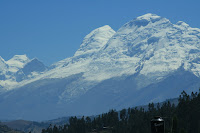
The Cordillera Blanca area is the part of the Andes where the mountains are consistently at their highest - although the highest single mountain in the Andes is on the Argentinean/Chilean border, with 33 mountains above 5000 metres, 16 of which are above 6000 metres - the Cordillera Blanca is the second highest mountain range in the world, second only to the Himalayas. The region (or more precisely the Cordillera Huayhash, just down the valley) was brought to wider public attention by Joe Simpson’s tale of his near fatal climbing expedition in the documentary film & book ‘Touching The Void.’

After a day of getting used to the altitude the 3 of us set out on a hike into the mountains, up to the Laguna Churup at 4,450m. This was due to be our ’acclimatisation’ hike in preparation for one of the multi day hike options on offer here. The hike turned out to be a pretty tough 8 hour route, the 4-5 hours of which to the Laguna were all solidly up hill, & the final 30 mins or so was a scramble up the side of a waterfall - which pushed Leanne’s fear of heights to the limit, & whilst she safely made it up & down the route, it was enough to convince her that this sort of activity wasn’t really for her & made plans to leave the mountains for Lima a couple of days later.
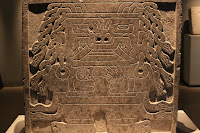
However not before Claire & Leanne took a trip the following day out to the archaeological site of Chavin, built between 1200 and 800 BC. The site contains a maze of underground tunnels, ducts and chambers and is considered a huge feat of engineering, particularly as its some 3000 years old. The bus trip to the site was equally as impressive as was the location for the site. The new museum, built only last year, has some great examples of pottery, huge stone deity heads and carvings. Most of the site is still undergoing excavation as in 1970 a landslide following an earthquake, covered the entire site in mud.

I on the other hand spent the day mountain biking with a local guide, famed with pioneering mountain biking in Peru. It turned out to be just he & I, & proceeded to have a pretty amazing day biking. Julio grew up in the area & has basically spent his whole life finding new routes & working out how to link them together. These trails are not your average tourist routes that many of the companies in the area offer - they are largely unknown to anyone other than Julio - so much so that even the other guide that he employs doesn’t actually know them yet. We drove up another 1000 metres or so from Huaraz to about 4100m where we began to ride. Because of the height you start at, the possibilities for long flowing down hills were great, & we rode some really nice trails for an hour pretty much solidly downhill without having to barely pedal at all. We carried on for another few hours after this, climbing & descending, riding through small local mountain communities - getting some weird looks from the locals who clearly couldn’t quite fathom out what the hell we were doing, riding bikes down the trails they use for navigating themselves around the mountain side. It was such a good day that I was determined to spend at least 1 more day riding with Julio before we left the Cordillera Blanca.

The following day we said Adios to Leanne again temporarily as she headed to Lima to hook up with the Irish girls she spent time with in Ecuador, & take up some Spanish lessons & hopefully some more surf lessons, having well & truly caught the surf bug.

Claire & I spent the day planning & arranging our 4 day trek through the Santa Cruz valley. We were picked up at 6am the following morning by our guide & the rest of our group (a couple from Brazil and a guy from Finland), & headed off to the Huascaran National Park (Huascaran being the name of the highest mountain in the area & the whole of Peru at 6,768m) for the start of the trek. We arrived in the town of Yungay for an early breakfast. The original site of the town of Yungay was completely buried in 1970, when an earthquake dislodged a huge part of the glacier on the surrounding mountains, creating an avalanche & landslide that buried 18,000 people alive. The Peruvian government subsequently prohibited any excavation of the site & declared it a national cemetery. The new town of Yungay has been reconstructed right next to the old site.

The scenery around here is absolutely stunning - the unique thing about this part of the Andes is that you are still right in the middle of the Tropics, so the snow line doesn’t even begin until around the 5000 metre mark (weird when you consider that Mont Blanc, the highest mountain in Europe is 4,800m & the peak is snow covered year round…) & there are all manner of tropical plants, lush vegetation & Cactus up to around 4000m.


The hike itself took us through some beautiful glacial valleys, past jade green glacial lakes, over a high pass called the Punta Union at 4760m, all with beautiful views of the snow capped peaks of the Cordillera Blanca around us. The first 2 days were quite demanding with a 5 hour climb on day one to the first campsite and then a steep 4 hour climb to the pass on day 2. The latter 2 days however involve a more gentle descent to the town of Cashapampa, where the trail ends.

Each day we only carried a day pack with food, water, layers, camera etc in and all the camping equipment and food was sent ahead on donkeys - something that provided a bit of drama, as after the first night camping the donkeys went AWOL, & the guys spent the next few hours scouring the area for our donkeys - they obviously didn‘t fancy the prospect of lugging all our gear up the mountain that day - can‘t say I blame them really… They eventually found the donkeys after employing the Andean version of Ethel from Eastenders, & reading the Coca tea leaves to find out where they were. Fortunately it worked somehow & we were back on track.

This is definitely a better way to camp, after a long day walking (average 7-8 hours) we arrived each night at the camp site to have the tent put up, coffee on to boil and dinner being prepared. Our donkey man, Eugenio and his son, Jean Pierre (only 7), pretty much ran past us each day to get ahead to ensure it was all set up for when we arrived…. They can pretty much do the entire 50km+ route in about 10 hours so what they must think of us tourist taking 4 days I am not sure!

Back in Huaraz, we meet for some beers with the others in the group and opt for a day off the next day. Not wanting to seem idol, Paul then books up another day mountain biking in the Cordillera Negra, which is the mountain range on the opposite side of the valley to the Cordillera Blanca - the main difference being the Cordillera Blanca are snow capped mountains, whereas the Cordillera Negra are not - though still exceed 5000m. After 40 km of downhill trails he comes back a little battered and bruised after a couple of minor mishaps….. thinking this is more than enough exercise for a few days, we jump on a bus & head to Lima to catch up with Leanne again.

Tuesday, 28 July 2009

Ecuador - Part 2, Riobamba, The Beach & Vilcabamba

From Banos we headed a little further south along the ‘Avenue of Volcanoes’ as the Pan-American highway through this part of Ecuador is known - to the city of Riobamba. Riobamba is the nearest major city to Ecuador’s highest volcano - named Chimborazo, weighing in at 6350 meters above sea level. Our plan was to mountain bike down it from the refuge at 5000m. We were also in town to embark upon the famous ‘Nariz Del Diablo’ (or Devil’s Nose) train journey from Riobamba, south to the towns of Alausi & Sibambe.

The train is something of a challenge to actually even get on these days, as it only runs a couple of days a week, is frequently cancelled at the last minute due to landslides, you can only buy tickets in person from the station in Riobamba the day before departure from 9.30am - & the tickets sell out fast, as not only is it one of Ecuador’s main attractions, but the locomotive train with several carriages that was previously used is currently under going repairs - so the trusty


old American school buses have been put into yet another after life use, & this time a bus has been converted to run on train tracks & act as the ‘temporary’ replacement train… & as a result there are only about 40-50 seats available for any one trip.
We had to travel to Riobamba on a Wednesday to stand any chance of getting on the Friday train - this constraint, coupled with some poor planning & communication on my behalf meant that unfortunately we were unable to meet up with the family of our Ecuadorian Spanish teacher from back home, Jenny - who’s family live just North of Riobamba in a city called Ambato - who had kindly offered to put us up for a couple of nights - lo siento un otra vez Jenny!

We hooked up with a guy we had been emailing about the mountain biking trip, a fella called Galo Briti, who’s father used to be Mayor of Riobamba. Galo himself holds the claim to fame of being the first person with a mountain bike in Riobamba & subsequently set up the first company to provide organised mountain bike tours of the surrounding areas. After a very thorough briefing & bike testing session on the Wednesday evening, we set out on Thursday morning for Volcano Chimborazo - after also having managed to negotiate with the owner of our hotel & a girl who worked at the train station to enable them to get tickets on our behalf for the train journey on Friday.

Galo turned out to be a great guide for the day, & the trip became much more than just a mountain bike trip, as he plied us with information about the local indigenous communities on the approach to the Volcano, the affects of the current & historical political policies on the ownership of the land & the effects on the communities - which interestingly has largely resulted in more power being given to the indigenous communities, so much so that the indigenous voting population now represents something like 27% of the overall vote, & as such means that the indigenous communities are able to pretty much determine the outcome of any election result as they all tend to vote together. As a result the politicians recognise the need to keep these communities on side, & often turn a blind eye to some of the agricultural practices they carry out, which tend to be less than environmentally friendly. A world away from the relative power the indigenous communities of Central America have, who are basically still in constant battle just to maintain any rights to the land they live on, & have been regularly slaughtered by the Government/military in large numbers over these basic rights.

We pulled up at the first refuge on Chimborazo at 4800m, & proceeded to hike (very slowly) up to the second refuge at 5000m - a breath taking experience - & not all because of the lack of oxygen at this altitude. The clouds broke & we were rewarded with stunning views across the high Andes & the surrounding Paramo’s (high altitude flat grass lands), which create a desert like setting.


Over the next few hours we descended on the bikes down to about 2500m, with a few vehicle assisted climbs to take us to some of the best descents along the way. En route we passed through old Inca ruin sites, through local communities, passed by llama, alpaca & vicuna (that produce the worlds most expensive wool - in fact the Chimborazo Volcano is a protected National Park, solely for the purpose of protecting the natural habitat of the Vicuna), past a natural water spring that actually flows with perfectly clear carbonated mineral water & tastes just like Perrier. We filled up a few bottles & have shipped them back to London to be sold in high class restaurants for £50 a time… gotta find some way of funding all these excursions! Yet again - another amazing, very rewarding day.

At 6.30am the following morning we boarded our train/bus for ‘La Nariz Del Diablo’. About 15 minutes out of Riobamba the train line passes through a cement plant, which presented us with the first challenge of the journey, as a lorry waiting to pick up his load of cement had parked right on the tracks, & although the driver was in the cab & the train/bus was chugging towards him, the lorry refused to move for a good 20 minutes until the Police were called to handle the situation…bizarre. Eventually we chugged on through the Andes, the rails regularly running inches from the edge of the cliff with drops of around several hundred metres to our left or right.

We encountered another couple of minor hold ups when we happened upon some landslide debris on the tracks, the conductor had to jump out & shovel the rocks etc off the tracks so we could carry on. Somehow I don’t think you would get away with the classic British excuse of ‘leaves on the track’ for train cancellations in Ecuador…

The section of the journey that actually gives the trip it’s name is between the towns of Alausi & Sibambe, where as a result of the seemingly in-passable landscape, the train has to zig zag it’s way down the sheer mountain side by a series of switchbacks, whereby the train over shots the corner, the points on the track are changed & the train reverses down the section, repeating the same process a few times until it has lost sufficient altitude to arrive at Sibambe. A very unique train journey - it certainly puts the Leamington to Marylebone route to shame to say the least.

From here we worked our way across to Ecuador’s second city, & main economic centre of Guayaquil. Although we were only there for 1 day & night, you can certainly feel that there is a little more money around the place than many of the other Ecuadorian cities we had visited so far. In the year 2000 a brand new promenade was developed & opened up, called ‘The Malecon 2000’ - which we spent the evening walking along, eating at one of the many restaurants that line the waterfront & checking out a few of the bars. As we sat there eating, it felt like we could’ve been sitting at a restaurant somewhere along the south bank of the Thames in London. The Malecon now also has a huge I-Max cinema complex, kids play areas, is palm tree lined & on the whole feel is very nice. It feels like a step towards a more prosperous future for Ecuador, also reinforced by the rows of luxury mansions that line the streets in the suburbs of Guayaquil that we passed on the bus on our way out to a little surf spot on the Pacific coast called Montanita.

Everything about this side of the country really feels different & just goes to reinforce how diverse Ecuador is a country - out here it’s all sand dunes, coast line, laid back fishing villages & surf spots. It seems strange to think it was all in the same country that we were recently in the Amazon basin, or surrounded by the highest volcanoes in the Andes. It is a little off the beaten track in Montanita, as most tourists follow the ‘Gringo Trail’ - which pretty much follows the route of the Pan-American highway through the Avenue of Volcanoes, so it feels like a little bit of a well kept secret - however it is popular enough to have developed into a pretty lively surf & party scene, & if you end up staying at one of the hostels right in the middle of the main centre then you better not plan on getting any sleep, as the bars & clubs are pumping out music until dawn pretty much every night. Fortunately we found ourselves a nice little place 2 minutes walk out of the centre that was totally quiet at night - so we had some peace to retreat to when we had enough partying.


It was here in Montanita that Leanne & I decided to have our first surf lesson. I have attempted surfing quite a few times in the past, though with little success - the lesson proved to be a worthwhile investment (all $15 of it for a 2 hour lesson inc. gear hire), as I managed to actually stand up & catch a few waves. Leanne had never attempted surfing at all before, though made some good initial progress, to be followed upon at a later date.

After about 4 days in Montanita Claire & I decided to move on, heading for the mountains again to a place called Vilcabamba. Leanne opted to stay another few days chilling out at the beach with a group of Irish people we had met up with.

Catching a few buses, we wound our way down the country 9 hours or so to Ecuador’s 3rd city and UNESCO site, Cuenca, another lovely colonial city. After a couple of city days we head on another 9 hours south to the mountain town of Vilcabamba, also known as the ‘valley of longevity’ due to the fact the locals are renowned for their extremely long lives - for more hiking and horse riding. We had seen posters all over Ecuador for a hostel that claimed to be a resort but without the price tag, set 2km out of town perched on a hilltop overlooking the valley, so that’s where we headed and we were not disappointed. Izhcayluma hostel was fantastic… sweeping views over the valley from the outdoor dining room, swimming pool, bar, cabanas, homemade bread and granola, buffet breakfast and German run so some great German food to escape from the fried chicken and rice you become accustomed to living on day in day out….!

There are numerous hikes around the area so we decided on an ’easy to moderate’ 5 hour one called the ‘Izhcayluma loop’ that took us up on the ridgeline above the hostel. Whilst it was a beautiful hike, there were parts of the ridgeline, that due to some pretty sever erosion were a little precarious to say the least! We see an advert for horse riding while we are there with a guy from New Zealand and opt for a 4 hour trip into the Podocarpus National Park. Without much discussion (nil) about previous horse riding experience, our guide canters off out of town with our 2 horses following quickly in pursuit. At this point it became apparent that Paul was not a professional rider. Having only been on a horse 3 times in his life, two of which on this trip and only ever managed a slow trot, he eased up a little! We wound our way up the mountain and into the National Park…. again, beautiful views but this time without the effort of walking! By the end of the 4 hours we were galloping back into town, Paul now completely at ease on the horse. We thought we were being clever in wearing cycling shorts to avoid too much ‘butt’ pain the following day as we had another long 8 hour bus journey over the border into Peru and whilst the cycling shorts helped, we did not bank on the leg and back pain. We didn’t realise that horse riding used so many muscles and could barely move the following day… We spent 5 days in total here having a really nice relaxed time, and it would have been very easy to stay for more!

Wednesday, 1 July 2009

Ecuador - Part 1 - Quito, The Amazon & Quilotoa

We arrived in the Ecuadorian capital city Quito, on a Friday night and set off to stay in the Mariscal district where I (Claire) had stayed previously…. It was very different from the area of the city I first visited 9 years earlier… every street now has a dozen or more hostels, bars, clubs and restaurants and not at all dissimilar to Koh San Road in Thailand for those that know it! Total tourist-ville, as oppose to the relatively un-touristy area I remembered - a little disappointing to see it go this way! We decided to have a few beers and try and make the most of the situation but alas that was not to be. We managed to time our arrival perfectly with the national elections. Over the 3 days period whilst these were going on (Fri, Sat and Sun), the whole of the country was alcohol free…. There was a ban on the consumption and buying of any alcohol anywhere by anyone to avoid any trouble and surprisingly, there was not one place that would relent!

We also knew that whilst in Quito, we would need to spend a few days acclimatizing, due to the fact it is situated at 2800m above sea level, so would need to relax and chill for a couple of days before attempting anything much. Fortunately on the saturday the famous indigenous market at Otavalo (about 2 hrs out of Quito) was on, so we jumped on a bus for the day up there. Whilst the market is largely targetted at tourists, alot of the handicrafts, paintings & such were of a really nice quality-hence we managed to spend a few dollars on some souveniers (yet more stuff to carry in our already oversized bags!).

Quito also has some beautiful colonial buildings of the ‘Old town’, an UNESCO heritage site since 1978, so we spent some time taking in the city & sampling a few of the local bars & restaurants during the course of it.

We took the newly built Teleferiquo (or cable car to the rest of us) up the flanks of Pichincha Volcano to Cruz Loma at 4,200m, from where you can continue to hike to the top of the volcano, or take a horse ride around part of the volcano as Paul & Leanne decided to do. Fortunately the cloud cleared enough for us to get some great views over Quito & the surrounding mountains.

One of the highlights of the Quito city visit was a visit to the house and now museum of ‘Oswaldo Guayasamin’, an indigenous painter from Quito whose world renowned paintings hang in many galleries and public buildings worldwide. His last work of art was a giant monument/museum called ‘The Capilla del Hombre’, a tribute to the suffering of the Latin American indigenous poor and the undying hope of a better world. He has some really impressive paintings - predominantly various depictions of the human condition, we bought a couple of replicas of his works at the Otavalo market earlier in the week.

After a few days in Quito we decided to embark upon a 5 day trip to the jungle of the Amazon basin, travelleing light for our 'side trip' & leaving the majority of our luggage at the hostel in Quito (bliss travelling with only one small bag!). We shopped around a bit & eventually opted for the campany that seemed to be the most ecologically & environmentally responsible tour operator, and decided on a jungle lodge close to both the Peruvian and Colombian border, in a place called the 'Cuyabeno Wildlife Reserve'.

We travelled for 8 hours overnight by bus to a place called Lago Agrio, an edgy frontier town that is now largely home to oil workers (being one of the main oil extraction locations from the Ecuadorian Amazon basin), ex-guerrillas and drug smugglers - but also the main entrance to the Cuyabeno jungle reserve. We travelled for a further 3 hours in a minibus and then a further 3 hours by motorised canoe to our lodge. The lodge was basic… a bed, mozzy net, cold river water for a shower, no electricity, hammock, poncho, wellies and 3 meals a day… however once we got over the fear of the insects (both size and quantity) and realised that the mozzy nets really did keep all insects out at night, we managed to relax and enjoy the whole experience.

We were very lucky the first day as there was only the 3 of us and the guide and after a 2 hour walk through the jungle and lunch, we took a dugout canoe along the smaller river channels - floating along about an inch from the water that has an abundance of Caiman alligators & Pirahna fish in -where we saw monkeys, an anteater, kingfishers, toucans, cuckoos, parrots and many more birds.
We were joined the following evening by another 5 people and we spent the days on the river watching pink river dolphins, fishing for piranhas, night time Caiman alligator spotting, visiting a local Amazonian community downstream, as well as hiking in the jungle with our guide and native guide who explained the medicinal use of a lot of the flora and fauna to be found. The guide also did night tours to see the many insects and animals that are nocturnal… Leanne and I decided against the trip for obvious reasons, though Paul went along - fully covered from head to toe to prevent any unwelcome insects or spiders hitching a ride!
We then made the long journey back to Quito, spent a couple of nights there again before heading off to Latacunga, a main town on the panamericana highway and starting point for the 'Quilotoa loop'. The Quilotoa loop involves a series of mountain dirt roads linking some remote Andean villages where transport is limited but has great hiking opportunities. We took a bus to the village of Quilotoa to see the Laguna Quilotoa, a stunning turquoise blue volcanic crater lake before heading back down the road to the town of Zumbahua as we had heard a fiesta was going on…. The running of the bulls… although not quite Pamplona style! A makeshift bull ring had been constructed and all the villagers were eagerly watching the entertainment… young boys teasing the bull before legging it the minute the bull all but looked in their direction! All the women were strolling or staggering around with boxes of peach schnapps and the men bottles of moonshine, rum or beer… after a few hours, everyone was very drunk and dancing outside the bull ring. There were also frequent attempts (much to our amusement) of drunk men trying to get on, stay on and ride their horses home! We were only 3 of no more than about 7 or 8 toursists at the event, & were made to feel very welcome by all the locals - a really entertaining day.
Once we had had enough, we managed to find a truck driver (relatively sober!) that would take us to the next village along the loop called Chugchilan, from where in the morning we wanted to embark in a hike to the village of Isinlivi, and so began the 2 hour journey, standing in the back of the truck along narrow, high, windy Andean roads…We were making friends with the locals also in the truck by sharing around our bottle of Lemon Rum we had bought to get into the swing of the festivities. At every stop off the driver was asking for a shot of rum - to which we made him wait until he had safely dropped us off at our destination!

There are only 2 hostels in Chugchilan, both next to each other so no trouble to find accommodation. After a good nights sleep we wake bright and early ready for the hike. We were given some basic instructions which we managed to completely misinterpret and got lost, not just once but 3 times which resulted in the 4-6 hours hike actually being 8 hours!

Had it not been a glorious sunny day, absolutely stunning scenery and having nothing to get to Isinlivi (the next town on the loop) early for, we might have been a little worried - but many locals gave us friendly smiles and waves (and directions) en route, and we did eventually make it to Isinlivi. We actually arrived to an empty, locked up hostel (the only one in town), where a friendly local had to go and find the owner. Once settled, she whipped us up a 3 course meal, lit a log fire and we settled down to a quiet night… well until 6 am when the brass band we had heard rehearsing the previous evening started up again walking up & down the streets of the town, to kick start the festivities off in that village!
The only way out of Isinlivi is by truck, in this case, the milk truck. At 9.30 we climbed in the back of the milk truck on its rounds around the area where local farmers hand over their un-pasteurised milk in exchange for money or pasteurised milk. We continued around the loop for another 2 hours, clinging on in some parts as we ascended over some high mountain passes, rewarded however with some stunning views over the Cotopaxi Volcano region. All in all a fantastic few days - one of the highlights of our Ecuadorian trip.
We head back to Latacunga to pick up the big heavy bags again and take a bus to Banos. This was quite a disappointment for me from the memories I had from my previous visit here, as the town is situated in such a beautiful cloud forest valley but is now marred by the neon lights everywhere, bars and clubs, hundreds of hostels and tour companies offering bungy jumping, quad bikes, off road buggies - you name it. A bit of shame. We did however manage to find a great hostel however, more like a 4* hotel for $7.50 a night which was the bargain of the trip so far. It was probably just as well it was such a nice hostel, as Paul was ill for the entire time we were in Banos & was barely able to leave the room...

Sunday, 28 June 2009

Into South America - Colombia...

So we took the easy option, thinking better of attempting the Panama/Colombia overland border crossing & flew down from Costa Rica, via Miami, into the Colombian city of Medellin. Slightly unsure about what to expect after hearing & reading about so many horror stories about Colombia over the years, we arrived with a certain amount of trepidation...
Any misgivings we had were very quickly dissolved as we were greeted at Medellin airport by some very warm & friendly people (even the taxi drivers were pleasant!), & as we took the 45 minute journey across the Andes from the airport to the city, it became ever more apparent that the Colombia of today is not the Colombia we had imagined. Medellin is a city set in possibly one the most attractive settings we have seen so far on this trip, set in the base of an Andean valley at around 1,500m above sea level, dissected North/South by the River Medellin - it is a stunning sight as you cross the summit of the surrounding mountains at either day or night & take in the panoramic views as you descend the valley into the city.


Medellin is known by most as the city that the infamous drug baron Pablo Escobar & his notorious drugs cartel called home in the '80's & '90's - however since his death in '93, & with gradual poltical stability being regained, the government has made a lot of effort to revitalise the city. Medellin now has a very modern public transport system, including 2 cable cars that link directly into the metro stations, linking the once isolated, dangerous & poverty stricken areas of the city up the valley walls with the main city centre, enabling better access for jobs etc to the communities of these areas. There are now numerous art & culture galleries in the city - with a paricular bias to the Colombian artist 'Botero' - an artist who focus'on the fuller figure, there are now many sculptures & paintings around the main cultural centre.


Medellin also has modern shopping malls like any European city, & a very affluent & modern district called El Poblado - the area where our hostel was.

Hostel Tamarindo was a very nice, modern homely hostel run by a Colombian American girl called Natalie, who spoke perfect English & was able to provide us with lots of useful local information. Natalie even took the 3 of us out one night to a great sushi restuarant & onto a real Colombian locals live salsa club, where we were 3 of only about 5 non Colombians in there. The club was great - small, dark, overcrowded, hot & loud with a really cool live band playing a sort of street salsa. I have to say the locals somewhat put us stiff Brits to shame in the dancing area...not that we actually humiliated ourselves by attempting to dance that night, but needless to say there was some pretty smooth moves going on. It was quite funny to see the cultural difference that they have here, where groups of friends would take it turn to dance one on one with each other some up close & steamy routines...can't quite imagine our groups of mates doing the same thing down the pub back home!

After about 4 days in Medellin we flew to the Carribean coastal city of Cartagena - a UNESCO world heritage site for it's beautifully preserved colonial walled city & fortress'. Cartagena is the one area of Colombia where tourism has actually remained fairly active during the years that the majority of the rest of the country was considered off limits...and unfortunately it shows. In the exact opposite of the way things were in Medellin, where we could freely walk the streets & blend into the cosmopolitan city life quite easily without being hassled at all, as soon as we got to Cartagena there were hustlers on us trying to scam us, 'assist' us with our search for hostels, bars, restuarants (for a very reasonable financial contribution naturally...), not to mention the abundance of tour guides who all seemed to double up as drug dealers, living up to the Colombian stereotype. Literally within the first hour of walking the streets we were offered all manner of drugs at least 10 times by 10 different people. An image that the rest of the country seems to be trying hard to dispel, in Cartagena the simple economics of supply & demand still remains the easiest way to a fast buck.
That said, Caragena was actually quite nice, ridiculously hot again - humidity like you wouldn't believe (averages 90% apparently), as soon as you are out of the shower & dressed you need another shower again. Claire & I both had pretty bad colds while we here (fortunately not swine flu!), so with the added discomfort of the heat we took it as our cue to do very little for the few days we were here - with the exception of a couple of nights out, the main night being at 'Havana Cafe' - which as the name suggests was a Cuban styled bar that specialised in Rum, Mojitos & live music. Needless to say, we all thought better of taking to the dancefloor in fear of upstaging the locals...

Leanne on the other hand was up for some more adventure, & decided on our last full day in Cartagena to hit the beach. Unfortunately the beach on the mainland is not particularly pleasant, so it involves a boat ride out to an island to get to the quintessential Caribbean white sand beach of Playa Blanca. True to form as per all the other hustlers in Cartagena, getting a straight answer out of anyone running boat trips about whether they actually go to where you want to go is not an easy process - favouring to tell you what they think you want you want to hear, regardless of whether it's true or not just to get your cash & on board their boat heading to wherever they may be going. This coupled with Leanne's basic grasp of Spanish, the combination resulted in her being taken to an aquarium on the wrong island in a boat full of Colombians, none of whom spoke any English to assist with her plight. When Leanne's irrate English-women rantings finally got her message across, they did eventually take her to Playa Blanca, by which point the sun had gone in & a tropical rainstorm had kicked off...the tan didn't exactly get much of a topping up that day!
Feeling not entirely displeased to be leaving Cartagena - keen to get back to a city atmosphere, we jumped on another flight down to Bogota. Without wishing to sound like heathen, part of the reason we had something of a lack of affinity with Cartagena was down to a case of Colonial fatigue. Whilst all these places in isolation are very spectacular, we had visited quite a number of Latin American picturesque Colonial towns in a relatively short period of time prior to getting here, & you do get a bit tired of the same sort of theme. That, & the scamming, thieving scum bags that prey on the area of course (though to be fair we did also meet some very nice locals there as well).

So we arrived in Bogota, a city also in a rather spectacular setting high in the Andes. At 2650m above sea level it is the third highest capital city in the world behind only Quito (Ecuador) & La Paz (Bolivia). We had found a new hostel on line that boasted an on site bar, daily BBQ's, & all the usual trimmings we have become accustomed to (...a bunk bed, a bathroom, breakfast - the usual 5 star luxuries...) located in the historical old town area - or la Candelaria, the hostel was called 'Destino Nomada' for any of you planning a trip to Bogota soon. It certainly lived up to it's own hype, & in many ways surpassed it. The guys that own & run it are 20/30 somethings who have all been backpackers in the recent past & have basically pulled together their idea of the perfect hostel - which it pretty much was really. The afternoon we arrived, Colombia were playing Argentina in a world cup qualifying match, for which all the locals were fired up for, ready to throw a huge party if Colombia were to win as it had been a number of years since Colombia had beaten Argentina in a football match. We all piled into the on site bar, a good mix of travellers & locals, & proceeded to get stuck into the local brew & cheer on our new favourite team. As promised, BBQ'd burgers & chicken wings were served up at half time & things were shaping up nicely, Colombia looking fairly dominant in the match. Then Argentina scored & Colombia were not able to pull it back. Major city party cancelled, we decided to carry on & make our own party anyway. We made our way out into the city to meet up with an acquaintance of Leanne's - who Claire & I are not actually convinced exists, because after arranging a time & place for us to wait around for him on some dodgy street corner in the Bogota equivalent of Shoreditch, the loser never actually showed. So after looking into a few bars we decided there was as much, if not more fun, to be had back at our onsite bar in the hostel with our new found friends, where we had a really funny mini party through to the following morning.

We were only in Bogota for 3 days which was a real shame in the end as it is a great city but takes at least a few days to come around to that way of thinking ie it is so sprawling, you need to experience some of the different areas to get a feel for it properly and that can take a good few days.

There are also some good sights to see just out of the city which we were pushed for time to see however, Claire managed to visit a place called Zipaquira, about 30km away, to see the infamous ´Salt Cathedral´. There is a working salt mine there where many years ago the miners built a cathedral within it but it was destroyed in the 1990´s. The miners got together with Architects to design another that is now a key tourist attraction however mining is still a huge part of the community but it is now done in the evening approx. 1000ft away from the Cathedral to avoid disturbing the visitors. It is very impressive!! Huge grand columns, simply designed with lit crosses, quite a feat of engineering.


We had been told in advance that the journey through the countryside between Bogota and Medellin is absolutely stunning and so we took a bus on this leg... 9 hours of amazing countryside dotted with small villages. We only wished that we had taken more buses intead of planes and spend much more time here... definetely a place to come back to and explore more.


We then had another flight booked for Quito, Ecuador but had a few problems trying to get out of the country.... we had changed the dates of the LAN flight but LAN had only changed 2 of the flights... Claire was booked on a different flight that had departed 4 days earlier! After a couple of hours of discussions about our ´fully flexible´tickets, they conceded they had made a mistake and could have simply changed the date of Claire´s flight ... by this time however, the gate had closed and they refused to let us board.... 24 hours later after a night in a not so nice town called Rionegro, close to the airport, we eventually left Colombia & flew to Quito!

Wednesday, 3 June 2009

Costa Rica

Not only was our method of travel into Costa Rica something that we had not been accustomed to over the last 5 weeks or so, but the relative normality & civilization of Costa Rica took us a little by surprise. As the wealthiest of the Central American countries with the most prolific & developed tourist industry, there are times when Costa Rica can feel like a tropical state of North America. Whilst Spanish is still the primary language, English is widely spoken, the buses resemble human transportation means rather than agricultural & livestock transportation & the roads have a form of order & structure not seen since Mexico.

We landed in San Jose & headed straight to the Pacific coast, first to a port town called Puntarenas, before catching a boat across the Gulf de Nicoya, over to the Nicoya Peninsula & planting ourselves in the bohemian surf town of Montezuma.


After a bit of a torturous accommodation hunt (we are back in hellish heat & humidity territory here) we finally found a beautiful old colonial style wooden house - like something from Out Of Africa, right on the beach - which was basically a family home where they rented out a couple of rooms. We then proceeded to do…well, very little actually for a couple of days - exactly what you are meant to do in places like this. We had had a pretty full on few days of traveling leading up to getting here & were glad of a chance to just relax a while.

On day 3 we decided it was time to actually do something, & took out some sea kayak’s from the guy who owned the place we were staying & paddled our way out into the Pacific along the coast. For the most part the sea was nice & calm, until we got to a surfing bay where Claire got caught by a wave & quickly surfed her way into shore (unintentionally i may add!), quickly followed by the rest of us in a less than stylish manner - with the exception of Leanne, who inadvertently caught the perfect wave & cruised in like a total pro, losing her paddle & sunglasses on the way but laughing hysterically the entire time!

Unfortunately we are on a little bit of time schedule in Costa Rica, as we have another flight to catch on Sun 31st May out to Colombia, so Thursday we decided it was time to move on & made our way back onto the main land to Monteverde
Monteverde is a place up in the mountains, full of cloud forest, Volcano’s & known as the epicenter of the Costa Rican ‘Canopy Tour’ industry. Which basically consists of a series of steel cables being strung between trees, across valleys etc that you connect a little pulley & harness to & make your way around the forest on - otherwise known as zip-lines. The company we went with boasted having the longest & highest cables in the world, so off we went. It was great fun - a few of the cables were about 600 meters long, one of which was actually 1km long, stretching right across valleys, we were often 200m off the ground just hanging from a harness whizzing across the sky! Below the longest zip wire across the valleys... 1km and 200m up!
Claire & I then went on a tour of a coffee plantation in the afternoon which was really interesting, seeing what a convoluted, labour intensive process it is to actually get our daily caffeine hit to our tables.

The following morning Claire & Leanne took some horses out for a tour of the countryside before we jumped in yet another bus to head back to San Jose to catch our flight down to Colombia.


...A fleeting visit through El Salvador

...After spending a little longer than originally planned in Guatemala we were left with only a couple of days to see part of El Salvador as we had a flight to catch on Sun 24th May. We caught a bus across the border & followed the ‘Ruta de Flores’ (Route of Flowers) - which is a beautiful stretch of mountain road lined with all manor of tropical plants, through to a town called Juayua - where there was a market & street party going on. It was really entertaining, there were a number of live bands - all playing music with a religious message, of which we understood little due to the language - but there was one band in particular who were really good & had the hundreds of people in the street bopping away in the name of the lord like there was no tomorrow! We stopped the night here & met some nice locals who told us all about the hardships of their lives under the weight of the civil war & the US Governments exploitation of their land. Easy to forget sometimes how fortunate we are to come from a developed relatively civilized society!


We then roughed it across a series of 4 local buses to the airport in San Salvador - whereby we were transported to a different world, as it transpired that our flight tickets were business class (of which we knew nothing) - so proceeded to hit the executive lounge & take full advantage of the complimentary bar, before boarding our plane for a full luxury flight down the Pacific coast over Nicaragua into San Jose, Costa Rica. We could definitely do with a few more journeys like that one!

Wednesday, 27 May 2009

Through Guatemala...In which the earth actually did move for us...

...So we crossed the border from Belize into Guatemala, begrudgingly paying the extortionate exit & entry taxes that seemed to just go straight into the pockets of the immigration officials, & made our way down to a town called El Remate on the shores of Lake Peten Itza, which is essentially the closest town to Guatemala's largest & most significant Mayan archaeological site of Tikal. Tikal dates back to c. 500bc, was a major power of the Mayan world until it was defeated & ultimately deserted around 1000ad upon which it was quickly swallowed up by the jungle, not to be re-discovered until 1848 by some locals harvesting chewing gum trees.

So the following morning at 5.30am we set off on the c. 25km journey into the mountains & jungle headed for the site. The location really is quite stunning, deep in the jungle you are surrounded by the sound of tropical birds & howler monkeys - who from a distance sound quite fearsome - adding to the atmosphere of the place. It is a huge area with several hundred structures that have been excavated, including 7 main pyramid temples, the tallest of which exceeds 70 meters in height - which makes that fact that this place was completely buried without trace by the jungle vegetation pretty amazing.


The following day we journeyed further south heading for a place called Semuc Champey - regarded as one of the new wonders of the natural world. After travelling through the whole of Belize on the local 'Chicken Buses' (named so because that is what often up sharing your seat with, on their way to & from market), we decided we treat ourselves to the relative luxury of the tourist mini bus service that is a direct door to door affair, costs about 10 times the price of the local buses & is generally regarded as a more comfortable option....wrong! 15 of us then spent the next 7 hours crammed into a mini bus designed for 12 passengers, complete with the drivers mate travelling the entire journey on the roof of the van hanging onto the luggage.

Guatemala's landscape is made up of 90% mountainous areas, so the views for the most part were really impressive, though what was really quite striking from this bus journey & also the subsequent journeys we took through Guatemala was the extent of the deforestation that is going on all over the place. Almost every other hillside has a fire still smouldering where the trees have been felled, the ground burnt to prevent re-growth in the hope that the land will be able to be used for agricultural cash crops in later years. Clearly, most of us from developed countries have some level of environmental conscience these days, & are aware that these things go on in the developing nations though it is very easy to feel removed from the reality of the situation until you see it first hand. It was enough to convince us to cut down our Sunday newspaper intake from The Times, The Observer, The Independent, The Mirror & The Sport to the bare essentials of just The Sport...

Anyway, we had a couple of days chilling out in wood & straw cabana's perched on the hillside on the banks of a river - a gorgeous setting before making our way out to Semuc Champey. Semuc Champey essentially is a huge gorge carved in the limestone hillside by a river over millions of years, & there is one place where several thousands of years ago a huge slab of the limestone cliff collapsed across the river creating a natural limestone bridge. the river still flows underneath it, though on top there are a series of tiers in which have formed natural pools created from the water running down off the hillsides - a really beautiful spot, but more importantly you can swim in the pools & throw yourself off the different levels of the tiers into the water below & jump the 10m off the final tier into the river below which was great fun.

To top the day off we headed down to some local caves at dusk & sat at the entrance of the cave as literally hundred's of thousands of bats fly millimetres from our heads as they headed out for their evening meal. Thankfully all the bats seemed to have had their sonar devices recently serviced, as with the exception of the odd bit of bat shit, nothing actually hit us!


Next on the agenda was the picturesque Spanish Colonial town of Antigua,
just outside of the hellhole that is Guatemala City. Antigua is a very nice place, very touristy however & the prices of everything reflect the fact that this is a particularly popular spot.


After vowing not to get on anymore 'tourist designated' bus services, we set off on an adventure to lake Atitlan, Xela & a huge market town called Chichi for the next few days using nothing but the local Chicken
buses. Lake Atitlan looked beautifully serence from the bus winding down the mountainside although not quite so when we got there.... 'hassle' and 'fleece' the tourists was the number one pastime which marred the whole experience a little although you can understand why when hordes of tourists head into town in air conditioned buses, bling jewellery on show and will pay anything they ask rather than barter for anything.
Xela was a great place had we the time to do some of the many hikes on offer although, the rains start around 3pm, so most activities need to be finished by then or you are absolutely soaked like you have jumped into a pool with your clothes on!
Whilst travelling around on the chicken buses saved us a small fortune vs. the cost of the tourist buses, it certainly provided us with our fair share of 'exciting' moments along the way. The main link road through Guatemala is the Inter-Americana highway, which because it is called a highway, people drive on it like it is a highway - even though for the most part it winds its ways up, down & around the Guatemalan highlands. Some of the road is paved, some of it is a dirt track, some of it is single lane, some of it dual carriageway, some of it has roadworks going on, some of it has a contra-flow in place - none of these things however affect the constant 100kph the bus drivers insist on sticking to - literally launching these old dilapidated hand-me-down American school buses of the tarmac onto the dirt track that is about 1ft lower - there were bags, people & chickens being thrown all over the place. Absolutely hilarious & absolutely terrifying in equal measures!
We returned to Antigua for a final couple of days in Guatemala & had a couple more pretty exceptional experiences. The first of which was there was an earth tremor - not quite an earthquake, but definitely some seismic shifting going on. It was really weird, like we were stood on a frozen lake in our socks for a few moments as the ground literally slid around beneath our feet - the weird thing was that walls of building moved with the ground in perfect unison & nothing collapsed.

The second unique experience was that we climbed an active volcano just out of Antigua, called Pacaya - where you could toast marshmallows over the lava, walking across lava that had recently hardened & getting within inches of the stuff that was flowing. We had a 'guide' in the loosest sense of the word - who was running & jumping around on the hardened lava, one of the guys in our group actually fell through some of the hardened lava cutting his legs to ribbons on the razor sharp debris. Health & safety clearly doesn't come into it over here - apparently there is nowhere else in the world where you can get so close to active lava unless you are some sort of professional Geologist or something - a unique but really quite unnerving experience, hovering inches above molten earth that is in excess of 2000 degrees C - there wouldn't be much foot left if you fell through into that!

This journey through Guatemala really challenged the pre-conceptions we had of the country - & that no doubt most Westerners who have never been here also have, based on the 36 years of civil war that tore the country apart up until 1996. Whilst there is still massive amounts of corruption clearly evident, huge wealth & huge poverty on display, 90% of the people we met along the way were really kind, helpful, happy & respectful of tourists - recognising the benefits tourism brings to their country.
Guatemala is a stunning country, full of mountains, lakes & caves, has a Pacific & Caribbean Coast & has a whole host of things to see & they also need to remember tourists will not continue to keep paying the ever increasing costs to do and see these things.... there was a local and foreign price for everything and although this is fair in concept, the foreigner cost is rising quickly and these costs there have more than doubled from the costs the lonely planet was quoting in a book only a year ago.
The only slight dampener on our time here was the fact that on the final day as we got the bus into Guatemala city to catch a connecting bus onto El Salvador, Claire was pick pocketed & had her purse stolen. Fortunately there wasn't a great deal in there, & in reality this could've happened anywhere - so we won't hold it against you too much Mr Guatemala...

Tuesday, 12 May 2009

From the Pacific to the Caribbean - Mexico to Belize

After literally melting ourselves in the intense heat of Mexico’s Pacific coast we headed east on a 12 hour bus journey across the mountains up to a beautiful old colonial styled town, 2100 metres up called ‘San Cristobal De Las Casas’. The climate here was pretty much perfect - sunny with a fresh breeze during the day, & something actually resembling mildly cold in the evenings - after the heat of Puerto Escondido this was a welcome relief.

One of the things that is definitely a theme in Mexico is their love of really loud music, played through completely knackered speakers with more emphasis on the distortion than the music…San Cristobal was no exception on this front - & whilst it does have a certain innocent charm in some instances, Pink Floyd played at full volume through speakers that really should’ve been binned several years previous whilst you’re eating breakfast first thing in the morning is enough to test anyone’s patience!

San Cristobal was a really cool place, very laid back, full of indigenous tribes of people all selling their handy crafts in the daily markets, beautiful architecture surrounded by stunning mountain scenery - we had some fun sampling a few of the local Tequila’s in a bar that had saddles with stirrups as bar stools - very funny!

After spending a few really nice days in San Cristobal we jumped on another 13 hour bus ride heading East towards the Yucatan Peninsula - quite a stunning drive across the mountains, passing one of the largest Mexican Mayan ruin sites called Palenque. The trip was made a little more interesting by the addition of a couple of military check stops - one group of military doctors getting on the bus checking people out for swine flu symptoms (thankfully there was no one on our bus that qualified), & later army check stop checking for drugs - again, no one qualified on our bus so we all moved on, arriving at the Mexico/Belize border at around 1am, only to find that there was no transport available on the Belizean side of the border save for a dodgy Belizean immigration official who offered us a ride into the nearest town for $30USD - due to the fact it was less than 10 miles away we decided out of principle we wouldn’t take him up on his kind offer…so we waited 6 hours for the first bus to turn up at 7am…Still, we befriended a Belizean military medical officer who was posted there to check people out for Swine flu on entry into the country (which consisted of a few questions - have you got a sore throat? Have you got a headache? Body aches? Fever? - answer no to all of the above & you’re through…) - he was bored out of his mind as apart from us there was literally no one else crossing the border that night, so he was filling us in on all the do’s & don’ts of various places in Belize & Guatemala.

When the bus finally arrived (an old hand-me-down disused American school bus) - we headed to a town called Orange Walk - & found ourselves back in the same intense heat again that we thought we had escaped in Mexico. From here we took a really cool jungle river boat tour up a crocodile infested river, surrounded by vultures, iguana’s, monkeys (we had 2 monkeys actually get in our boat with us) & a whole host of other wildlife - 2 hours up river to an ancient Mayan ruin site called Lamanai in the middle of the jungle. With the full on wide brimmed hats we were all sporting it all felt very Indiana Jones, there was hardly anyone else at Lamanai due to most tourists being scared off by the swine flu threat (even though Belize has had no reported cases so far), so we pretty much only shared the site with the howler monkeys that were chilling out in the trees above us. Really good day.

We then moved on to Belize City where we spent a night - didn’t bump into Ross Kemp filming a series of his ‘Gangs’ program thankfully - then caught a boat out to the Cayes to spend a couple of days chilling out on Caye Caulker, a beautiful Caribbean island that is just a mile or so away from the Belizean barrier reef which stretches for about 180 miles, second only in size to the Australian barrier reef. We took a really nice sail boat ride out with an old local guy called Juni - who actually built his own boat, for a snorkelling trip around the reef where we swam with nurse sharks, sting rays, turtles & a multitude of other beautiful marine life. Another really great day.

We then headed south towards the Cockscomb Basin Wildlife Sanctuary, in amongst the area where there are a large population of Jaguars (the animals, not the cars…). We stayed in an old fishing village called Hopkins that was home to the Garifuna people of African descent - renowned for their tribal drumming style music & laid back approach to life. They certainly lived up to their reputation on both fronts - there was a constant rhythm pulsing through the town day & night & the people were so laid back that the local bus that took the people of Hopkins onto the next town literally stopped every 20 metres to pick up passengers & carried out a tour of the entire town to ensure that they gave every household in the town the opportunity to be picked up from directly outside their own front door, because walking to one or two designated spots was all a little bit too much like hard work. Can‘t imagine that going on in Blighty somehow!

We took a combination of buses, hitching rides & taxis from Hopkins to the Cockscomb wildlife park, where unsurprisingly we didn’t see any Jaguars - I mean, who in their right mind would be out strolling around the jungle in the mid day sun when there is a shaded palm that you could be resting under….what is it they say about mad dog & English men?!? However it was all made worthwhile by a really refreshing swim in a waterfall in the middle of the jungle, & happening upon an old plane wreck in the jungle covered by vines & general overgrowth.


We spent one final night in Hopkins in our ramshackle beach front accommodation that we found we were sharing with a variety of insect life - including some enormous cockroaches & army ants. Claire & Leanne quickly drew up a ‘Memorandum of Responsibilities’ & designated me the responsible group member to deal with Cockroaches & spiders, Claire has committed to dealing with any encounters with rats & mice we may have, whilst Leanne has taken on the task of addressing any situations we may have with large mammals including jaguars and sharks, & also possibly helping out with some ant duties…something tells me I got the raw end of that particular deal!

We got another rickety old bus ride east to west across Belize & are currently sat in a town called San Ignacio on the Belize / Guatemala border, from where today we head into Guatemala - first stop in Guatemala is the ancient Mayan city of Tikal. On the whole Belize has been really good, if somewhat overpriced - largely due to the fact that it is quite a popular American holiday destination, & while they are willing to pay the price, people will charge the price. Considering Belize is an ex-British colony as well there is a remarkable lack of any sign of British influence, i.e. no architectural evidence, no real infrastructure to speak of - the only evidence is a good education system that is in place here, & the fact that most people speak English, as well as Spanish & Creole. Bye for now!